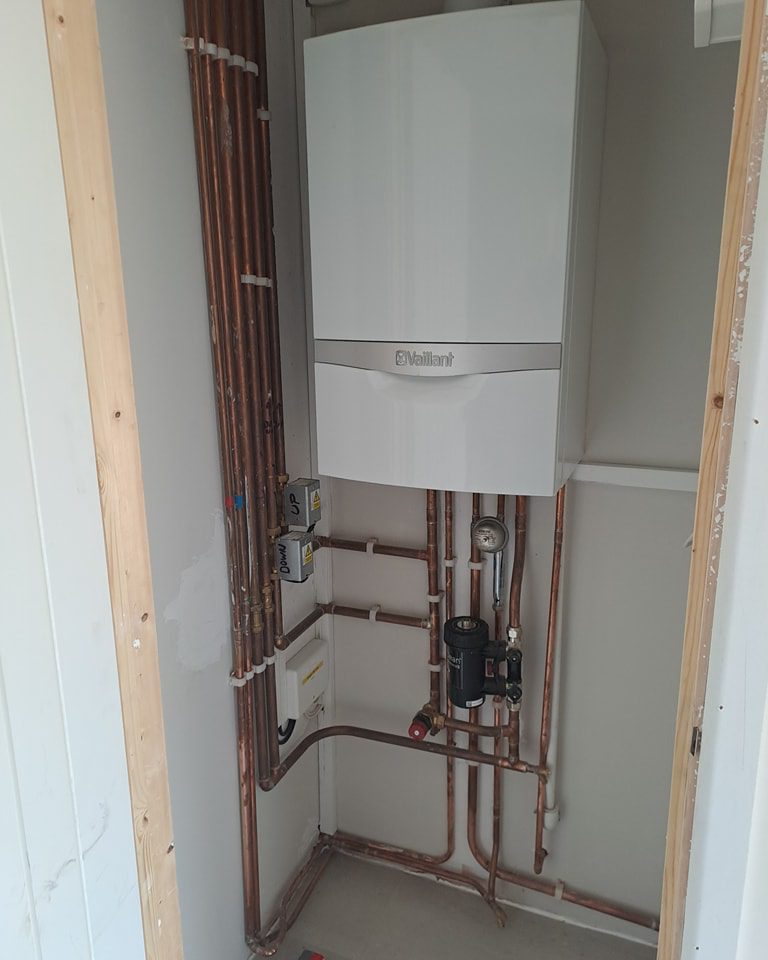
A Vaillant boiler losing pressure with no leak in sight may still have a concealed leak or a fault in the boiler. Pressure should be within 0.7 to 2.5 bar, and around 1.5 bar when the system is cold. Bleeding radiators, a faulty expansion vessel or a pressure relief valve letting water escape can also explain a falling reading.
A Vaillant boiler losing pressure with no visible leak can be frustrating, especially when the floors and pipework look dry. This guide explains how to read the pressure gauge, which common causes to consider and how a concealed leak may be investigated. You’ll also learn why repeatedly topping up the boiler may only mask the underlying problem, and when professional attention is sensible. The aim is to help you understand the signs and decide what to do next, calmly and safely.
Why is my boiler losing pressure?
Pressure can fall because water is escaping or a boiler component isn’t working correctly. The gauge reading and any fault code can help narrow down the cause.
Reading the pressure gauge and fault codes
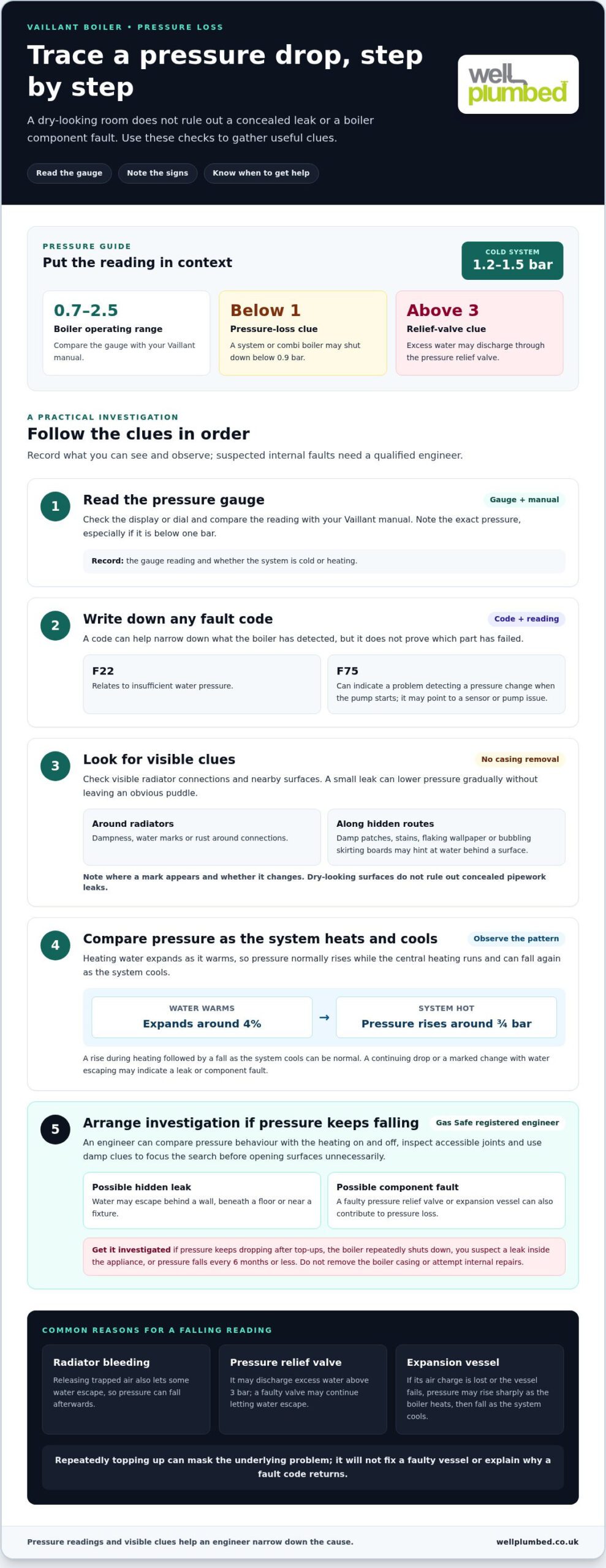
The gauge shows the water pressure in your heating system, while a fault code points towards a problem the boiler has detected. Check the display or dial and compare its reading with your Vaillant manual. Boilers should operate between 0.7 and 2.5 bar; below one bar indicates pressure loss. Most UK boilers read 1.2 to 1.5 bar when cold. A low reading alongside a fault code gives an engineer useful information to diagnose the issue, but the code alone doesn’t prove what has failed.
Leaks and faulty boiler components
Vaillant F22 and F75 codes
On Vaillant boilers, F22 relates to insufficient water pressure, while F75 can indicate a problem detecting a pressure change when the pump starts. Both codes can appear when pressure is low, but F75 may point to a sensor or pump issue rather than a visible leak. Note the exact code and gauge reading before seeking a diagnosis. Repeatedly topping up without investigating why the code returns can leave the underlying fault unresolved.
Faulty expansion vessels
An expansion vessel absorbs pressure changes as heating water warms and expands. If its air charge is lost or the vessel fails, pressure may rise sharply when the boiler heats, then fall as the system cools. You might notice repeated pressure changes or water escaping through the relief valve. An engineer can assess the vessel and related components; repeated top-ups won’t fix a faulty vessel.
Common causes of pressure loss
A Vaillant boiler can lose pressure even when the casing and visible pipework look dry. Water may escape slowly from a radiator connection, a concealed pipe or the pressure relief valve.
Common causes include:
- Radiator bleeding: releasing trapped air also lets some water escape, so the system pressure can fall afterwards.
- Pressure relief valve: if pressure rises above 3 bar, excess water may discharge through the valve. A faulty valve may continue letting water escape.
- Hidden leaks: corrosion or a loose pipe joint can release small amounts of water behind a wall, beneath flooring or near a radiator.
A hidden leak may leave clues rather than a visible pool. Look for damp patches, rust marks around radiator connections, water stains, flaking wallpaper or bubbling skirting boards. These signs can help show where water is escaping, but a dry-looking room doesn’t rule out a leak in concealed pipework. Note where the signs appear and whether the boiler pressure continues to fall.
Call a Gas Safe registered engineer if pressure keeps dropping after top-ups, the boiler repeatedly shuts down, or you suspect a leak from inside the appliance. A system or combi boiler may shut down below 0.9 bar, and repeated pressure loss needs investigation rather than regular topping up. Don’t remove the boiler casing or attempt internal repairs yourself. If the pressure falls every 6 months or less, arrange an inspection. For ongoing pressure concerns, boiler pressure advice can help you consider the next step.
Investigating concealed heating-system leaks
A heating system can lose water through pipework hidden behind walls, beneath floors or around fixed fittings. Comparing pressure readings and noting changes around the home can help narrow down where to investigate.
Pressure changes as water heats
Heating water expands by around 4% as it warms, so pressure normally rises as central heating runs. System pressure typically increases by around three-quarters of a bar when hot. A rise during heating followed by a fall as the system cools can be normal. A continuing drop, or a marked change alongside water escaping, may point to a leak or component fault that needs investigation.
Signs of a heating-system leak
Look for damp patches, discolouration, flaking paint or water stains near radiator connections and along pipe routes. Rust marks around a radiator, bubbling skirting boards or flaking wallpaper can also indicate water escaping behind a surface. Note the location and whether the mark changes; this gives an engineer useful clues. A concealed leak may leave no obvious wet patch, particularly if water is escaping slowly beneath flooring.
Leaks hidden within the heating system
If pressure keeps falling but visible radiators and pipework look dry, the leak may be behind a wall, under a floor or near a fixture. An engineer can compare the pressure behaviour with the heating on and off, inspect accessible joints, and use signs of damp to focus the investigation. The aim is to locate the leak before opening up surfaces unnecessarily. If a leak prompts you to rethink your heating layout, explore underfloor heating installation as one option.
WellPlumbed: Vaillant Boiler Installation
If an older boiler is no longer suitable to keep, replacing it may be the next step. WellPlumbed installs Vaillant boilers, giving homeowners in Bognor Regis, Chichester and Worthing a route to a new boiler when pressure problems point to replacement rather than a simple repair.
A new installation isn’t the answer to every pressure drop. If a repair can address the cause, replacement may not be needed; the decision depends on the boiler’s condition and the fault identified. If a new Vaillant boiler is the right option, the installation can be planned around your home’s heating and hot-water needs.
For a calm conversation about a Vaillant boiler installation, contact WellPlumbed.
Choose a clear next step for your heating
If your Vaillant boiler is losing pressure with no visible leak, note the pressure changes and any fault codes to explain the problem when seeking help. This gives the conversation a practical starting point and helps distinguish a boiler fault from a wider decision about your home’s heating.
If replacement is being considered, WellPlumbed offers Vaillant Boiler Installation. For a different approach to home heating, it also offers Air Source Heat Pump Installation and Underfloor Heating Installation. The right option depends on your home, existing system and heating requirements, so take time to discuss the choices without feeling rushed.
Contact WellPlumbed to discuss your heating needs, and take the next step with confidence.
Frequently Asked Questions
What if I can’t repressurise my boiler?
If the pressure doesn’t rise while you operate the filling loop, close the loop valves immediately and call a Gas Safe registered engineer. Check the instructions for your Vaillant filling-loop design, as arrangements vary. Don’t force a stiff valve or keep trying if the gauge stays unchanged. Note the reading and any displayed fault code to help explain what happened.
What if a gas engineer can’t find a fault?
Keep a record of when the pressure changes, including whether the heating was on and what the gauge showed. Note any Vaillant fault codes and where you’ve seen dampness, staining or other changes. A leak may be concealed in pipework or only become apparent under certain system conditions, so ask what areas and components have been examined and what further investigation is appropriate.
Why does a Vaillant boiler lose pressure when there is no visible leak?
The search phrase “Vaillant boiler losing pressure no leak” describes a pressure drop that may come from concealed pipework, a connection or the appliance itself. A slow leak can leave little evidence, especially beneath a floor or behind a fixture. Also consider faulty components such as the expansion vessel or pressure relief valve, which can lower pressure without an obvious wet patch.
What boiler pressure should a Vaillant boiler have when cold and when running?
A Vaillant boiler should typically read around 1.5 bar when cold. As the heating runs, pressure rises with the water temperature; around 2 bar when hot is typical. The stated operating range is 0.7 to 2.5 bar. Compare your reading with the manual for your model, and note whether it changes substantially between the cold and running states.
How do I repressurise a Vaillant boiler using its filling loop?
Follow the instructions for your Vaillant model and filling-loop design. With the boiler cool, locate the loop and monitor the pressure gauge as you open its valves; some instructions specify turning each valve by 90 degrees. Stop when the recommended pressure is reached, then close both valves. If the gauge doesn’t rise, close the loop immediately and contact a Gas Safe registered engineer.