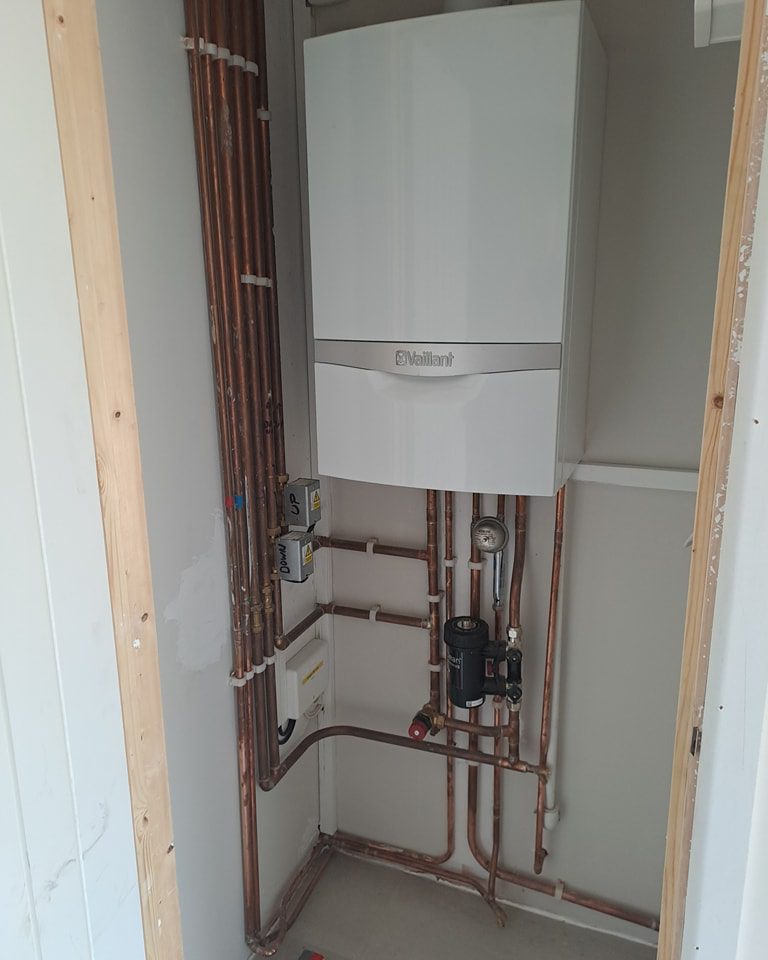
For a busy household, the right boiler can depend on how hot water is stored. A system boiler works with a separate hot-water cylinder, making it a practical option when several people may need hot water around the same time. The cylinder does take up space, though, and the stored supply is finite.
If you’re weighing up how the boiler and cylinder work together, or whether your home has room for both, this guide explains the main components and what to consider. Use it to compare your household’s hot-water routines with the space and access available, and to prepare for an installation discussion without getting lost in technical jargon.
What is a system boiler, and how does it heat your home?
A system boiler heats water for your radiators and for domestic hot water stored in a separate cylinder. Unlike a combi boiler, it does not heat water on demand every time you open a hot tap. Instead, it heats water in advance, ready for use from the cylinder.
The boiler sends heated water around the heating circuit. To heat the cylinder, hot water from the boiler flows through a coil inside it, transferring heat to the stored domestic water while keeping the two water supplies separate. For a general overview of how boilers produce heat, see What is a Boiler?
- The boiler heats water, which circulates through the pipework to radiators around the home.
- When the cylinder needs heating, hot water from the boiler flows through a coil inside it, transferring heat to the stored domestic water.
- When you turn on a hot tap, water comes from the cylinder. The boiler can reheat the cylinder as its temperature falls.
Controls can manage heating and hot water separately, so the system can warm the home, heat the cylinder or do both, depending on its settings. Because the cylinder holds a limited supply, its capacity and your household’s routine are important when choosing a system.
Which parts make up a system boiler setup?
A system boiler setup includes the boiler, a hot-water cylinder and the connected heating circuit of pipes and radiators. Key components, including the pump and expansion vessel, are built into the boiler. Older arrangements may use separate tanks and components elsewhere in the home. The cylinder still needs a suitable location, often an airing cupboard or utility area, with enough access for installation and future maintenance.
The boiler supplies the heat; the cylinder stores hot water for your taps.
Would a system boiler suit your household and available space?
A cylinder can help meet demand when several people need hot water close together, but it takes up room and stores a finite supply. The right choice depends on your household’s routines and the layout of your home, not on choosing the largest or most complex system available.
Use the guide below to identify what matters in your home. Cylinder capacity, the boiler and the existing plumbing all affect how well the setup meets your needs.
| Household pattern | Cylinder space | What to consider |
|---|---|---|
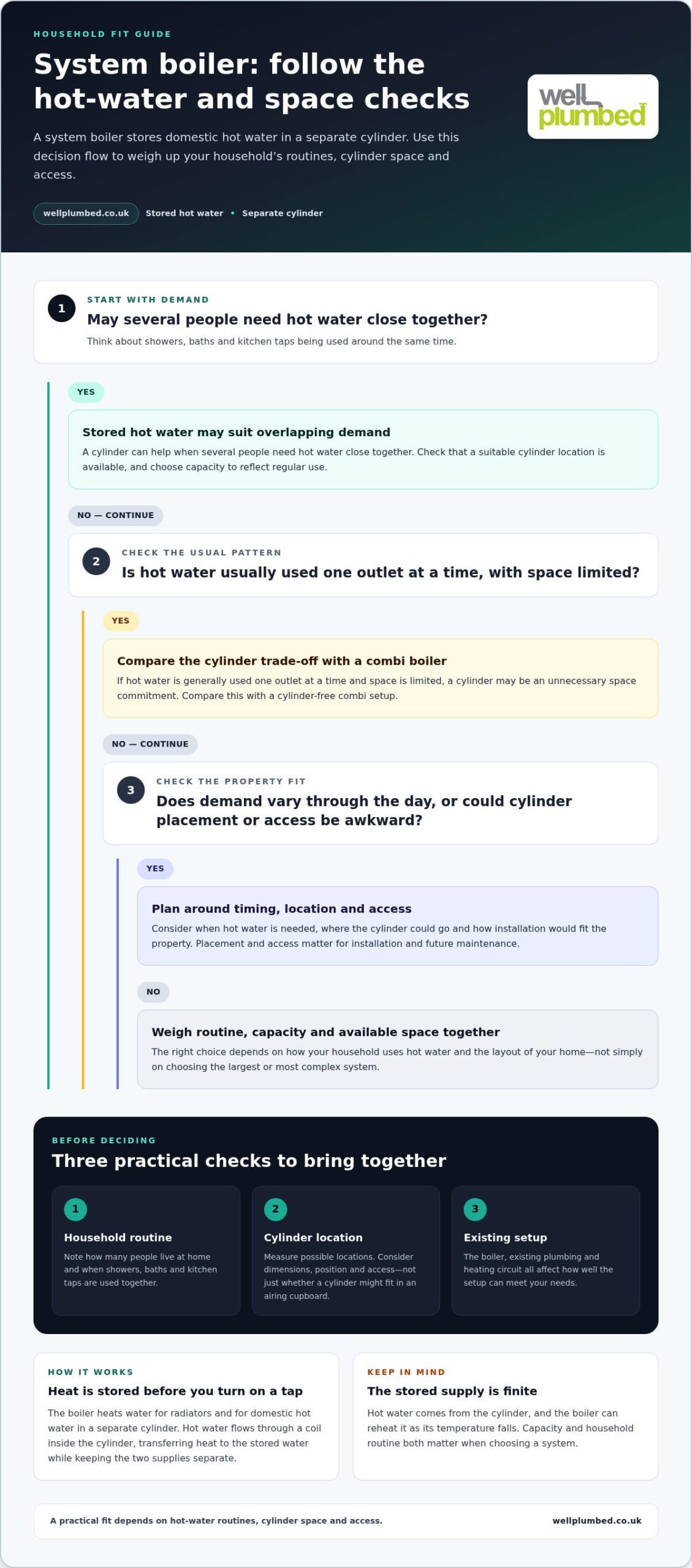
| Several people may shower or use taps close together | A suitable location is available | Stored hot water may suit overlapping demand; choose capacity to reflect regular use. |
| Hot water is usually used one outlet at a time | Space is limited | A cylinder may be an unnecessary space commitment; compare the trade-offs with a combi boiler. |
| Demand varies through the day | Access or placement may be awkward | Consider when hot water is needed, where the cylinder could go and how installation would fit the property. |
How do you decide if a system boiler fits your home?
Start by noting how many people live in the home, when showers, baths and kitchen taps are used together, and whether busy periods follow a predictable routine. Then measure possible cylinder locations and consider access for fitting and future maintenance. Don’t assume an airing cupboard is suitable just because a cylinder might fit inside: its dimensions, position and access all matter. Comparing combination and system boilers can clarify the trade-off between stored hot water and a cylinder-free setup.
A home assessment brings these details together. WellPlumbed’s boiler installation includes commissioning and system balancing, with household demand and available cylinder space considered during planning. Explore boiler installation guidance as a practical next step.
Planning a system boiler installation in West Sussex
A well-planned installation starts with the home, not just the boiler. The existing heating setup, your household’s hot-water use and a practical position for the cylinder all affect what will work. WellPlumbed has helped homeowners across West Sussex, including Bognor Regis, Chichester and Worthing, plan boiler installations since 2008, taking the details of each property into account.
A straightforward planning sequence is:
- Assess the home: review the existing boiler, radiators and pipework, along with how the household uses heating and hot water.
- Confirm the system requirements: establish what the property needs and identify a suitable cylinder location with enough access for installation.
- Plan the installation: organise the work around the agreed equipment, pipework and layout.
- Commission and balance: set up the installed boiler and adjust the heating system so it operates as intended.
What should homeowners expect from professional installation?
Good planning connects your household’s routines with the practical constraints of the property. The existing heating circuit and proposed cylinder position, for example, both influence how the installation is arranged. WellPlumbed’s boiler installation includes commissioning and system balancing, so the work covers more than fitting the boiler. The West Sussex boiler installation guide covers the local service, whilst the annual boiler servicing guide explains ongoing routine care.
Clear planning helps you make decisions about cylinder placement and how the new system will work with your radiators. If you’re considering a boiler installation in Bognor Regis, Chichester, Worthing or elsewhere in West Sussex, talk to WellPlumbed about your home and its practical requirements.
Take the next step towards a heating system that fits
Choosing a system boiler is about more than selecting equipment. It means planning a heating setup around how your home is used, while taking account of possible changes to household routines or the property. Before making a decision, note when hot-water demand is highest and any constraints around cylinder space, access or pipe routes. These details help keep the options grounded in what will work for your home.
WellPlumbed serves homeowners across West Sussex, including Bognor Regis, Chichester and Worthing. Its boiler installation includes commissioning and system balancing. Talk to WellPlumbed about a system boiler installation for your home.
Frequently Asked Questions
Does a system boiler need a hot-water cylinder?
Yes. A system boiler needs a separate hot-water cylinder to store domestic hot water. The cylinder may sit in an airing cupboard, but its position depends on the property. Consider pipe routes and access for installation and maintenance, not just whether the cylinder will physically fit.
Can a system boiler run out of hot water?
Yes. The stored supply can run low if demand exceeds the amount available before it is reheated. Several back-to-back showers followed by a bath, for example, may draw heavily on the cylinder. The boiler can heat more water, but this takes time, so you may need a pause between busy periods. Recovery time depends on the system and its settings.
Is a system boiler suitable for a small home?
It can be, but even a small home needs a practical place for the cylinder, and its hot-water use should justify the space. Think about how often outlets are used together rather than relying on floor area alone. Home layouts vary across Bognor Regis, Chichester and Worthing, so consider the available room, access and pipe routes when planning the design.
Can a system boiler work with radiators and underfloor heating?
Yes, a system boiler can serve both, provided the heating is designed with suitable controls and connections for each circuit. Radiators and underfloor heating can have different operating requirements, so the layout and control strategy need to account for both. If you’re planning underfloor heating in one room alongside radiators elsewhere, include that in the heating design from the outset.