Does your morning shower in Bognor Regis feel more like a weak trickle than a refreshing wake-up call? It’s a common frustration for homeowners in West Sussex, where older gravity-fed setups often struggle to provide decent pressure to upstairs bathrooms. You might also be tired of that bulky cold water tank taking up precious storage space in your loft. We understand that reliability and safety are your top priorities when it comes to your family’s home comfort.
In this guide, you will discover how an unvented hot water system delivers powerful, mains-pressure water to every tap in your house whilst allowing you to reclaim your attic. We will explain how these modern units work and why they are a perfectly safe, energy-efficient choice for your property. From technical G3 requirements to the benefits of Heat Geek expertise, here is everything you need to know about upgrading your home’s hot water performance.
What is an Unvented Hot Water System and How Does it Work?
Are you curious about what makes an unvented hot water system different? Unlike traditional gravity-fed setups that rely on a tank in the roof, this setup connects directly to your cold water mains. This creates a closed-loop environment. Because the water enters at mains pressure, it stays at that pressure throughout the house. You’ll get the same powerful flow in your upstairs shower as you do in the kitchen, whilst enjoying the peace of mind that comes with modern engineering.
Removing the header tank is a major benefit for West Sussex homeowners. By clearing out that bulky cold water tank, you regain valuable loft storage. It’s a practical solution for terrace houses in Bognor or bungalows in Chichester where every square inch counts. An unvented hot water system is often the key to unlocking the full potential of your home’s layout. If you are considering more extensive property improvements alongside your plumbing upgrades, Willmac Group provides professional construction services to help you fully transform your living space.
Since the water is stored under pressure, the system needs specialised safety components. These aren’t optional; they’re essential for a safe and reliable home.
The Key Components of a Modern Pressurised System
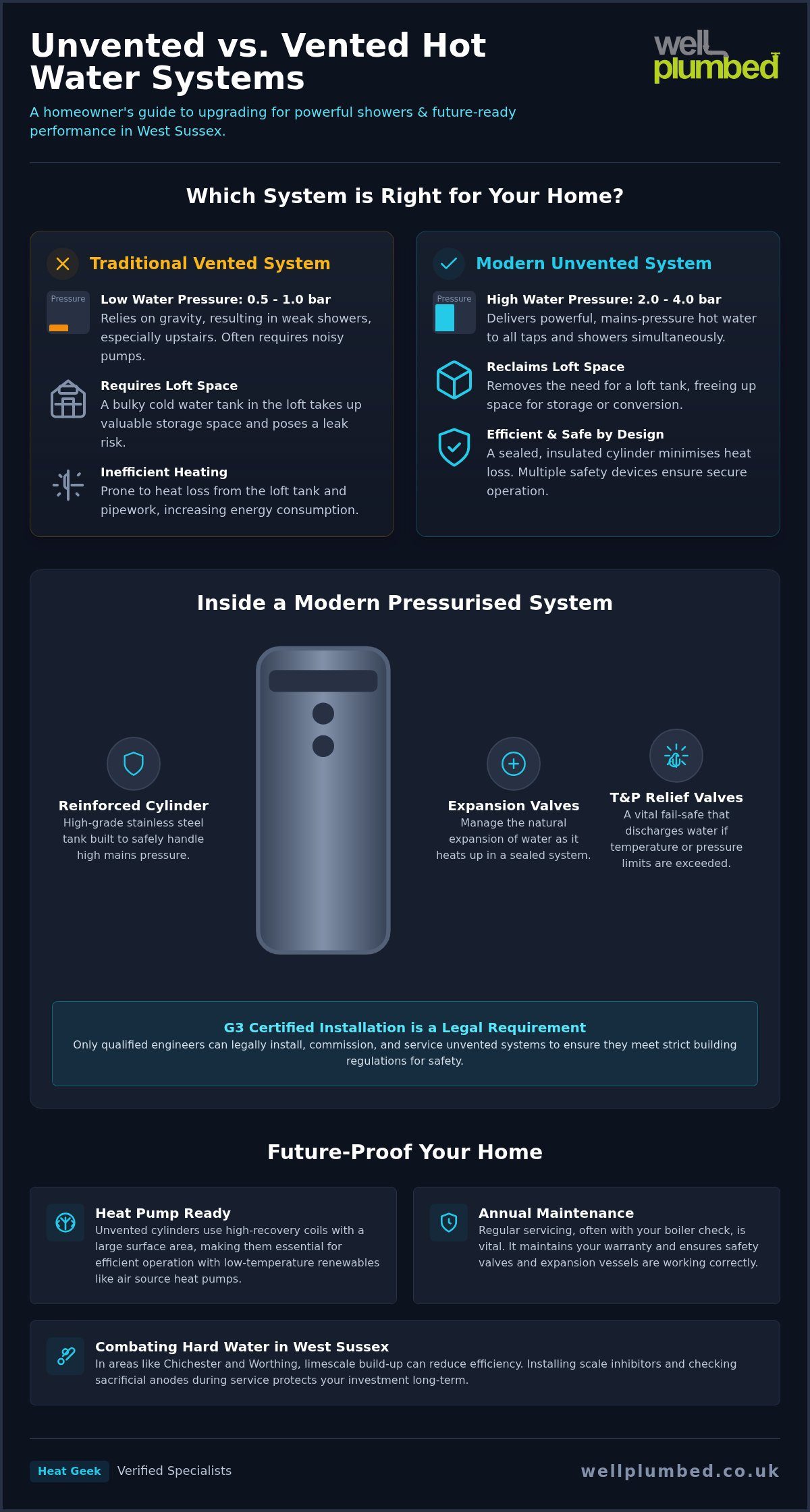
Every installation we perform includes high-quality safety gear to manage water expansion and maintain safety:
- The Cylinder: A reinforced tank, often made of high-grade stainless steel, built to handle high internal pressure.
- Expansion Relief Valves: These manage the natural expansion of water as it warms up within the closed system.
- T&P Valves: Temperature and Pressure relief valves provide a vital fail-safe by discharging water if safety limits are exceeded.
These components are governed by Approved Document G3 of the Building Regulations. It’s a legal requirement that only G3-qualified installers handle these systems. As Heat Geek verified specialists, our team ensures your system is commissioned correctly and safely, backed by years of experience serving the local community.
Comparing Unvented vs Vented Systems: Which is Best for Your Home?
How many times have you waited for the shower to warm up, only for the pressure to drop because someone turned on a tap downstairs? Older vented systems rely on gravity, which often provides a measly 0.5 to 1.0 bar of pressure. In contrast, an unvented hot water system delivers water at mains pressure, typically between 2.0 and 4.0 bar. This makes it the clear favourite for homes with multiple bathrooms where everyone needs a powerful shower at the same time.
Traditional loft tanks are essentially a relic of the past. They struggle to feed modern power showers without the help of noisy, expensive pumps. Because an unvented cylinder is pressurised, it doesn’t need to be tucked away in the eaves to work. You can place it almost anywhere, from a utility room to a basement. Before we begin any work, our team always carries out a thorough mains check. We verify that your local supply in Bognor or Worthing is strong enough to support the upgrade. If you are planning full bathroom renovations, checking these pressure levels early prevents any performance surprises later. For those looking to combine plumbing work with broader property improvements, WillsByrne Construction & Landscaping LTD provides professional building and landscaping services to help you fully transform your home and garden.
Future-Proofing with Heat Pumps and Renewables
If you are considering an air source heat pump installation, an unvented cylinder is practically essential. Heat pumps operate at lower temperatures than traditional gas boilers. To compensate, these cylinders use high-recovery coils with a much larger surface area. This design transfers heat more efficiently, ensuring you have plenty of hot water whilst keeping your energy bills low. It is a smart, reliable way to prepare your West Sussex property for the 2026 Future Homes Standard requirements.
Installation, Safety, and Maintenance: What Homeowners Must Know
Are you worried about the safety of a pressurised system? Modern cylinders are incredibly secure. They feature triple-redundant safety measures, including expansion relief and temperature-pressure valves. If one component ever fails, another is there to keep your home safe. Because an unvented hot water system operates under high pressure, it’s a legal requirement in the UK to use a G3-qualified engineer for the installation. This certification ensures the work meets strict building regulations and is properly self-certified.
The transition from a vented setup is usually straightforward. We decommission and remove your old loft tanks, which immediately removes the risk of leaks from aging header tanks. We also carry out a thorough inspection of your existing pipework. We want to be certain your pipes can handle the increased pressure before we commission the new unit. It’s about ensuring a smooth, stress-free upgrade for your household.
Ongoing care is just as vital as the initial fit. To keep your manufacturer’s warranty valid and your home safe, you should include the cylinder in your annual boiler servicing. During this visit, we check the expansion vessel’s charge and test all safety valves. This proactive approach prevents small issues from becoming expensive repairs.
West Sussex Water Quality and Your Cylinder
Chichester and Worthing are known for particularly hard water. Over time, limescale can build up inside your cylinder, which reduces heating efficiency and forces the system to work harder. We often recommend installing scale inhibitors or checking sacrificial anodes during your yearly service. These simple, honest additions protect your investment for the long term. They ensure your system remains as reliable and energy-efficient as the day it was installed.
Ready for Better Water Pressure in Your West Sussex Home?
Upgrading to an unvented hot water system is one of the most effective ways to modernise your home’s performance. By switching from a gravity-fed tank to a pressurised cylinder, you’ll enjoy consistent, powerful showers whilst gaining valuable storage space in your loft. Whether you’re planning a full bathroom renovation or preparing for a future heat pump installation, these systems provide a reliable and energy-efficient solution for years to come.
At WellPlumbed, we’ve been serving West Sussex families since 2008. As Heat Geek Verified and G3 qualified installers, we focus on honest guidance and expert workmanship that stands the test of time. We believe in making home maintenance straightforward and transparent for our neighbours in Bognor and Chichester. If you’re ready to improve your home’s comfort, you can speak directly to Ben at WellPlumbed about your hot water upgrade. We’re here to help you get the best out of your heating.
Frequently Asked Questions
Is an unvented hot water system dangerous?
No, these systems are entirely safe when fitted by a G3-qualified professional. Modern cylinders include multiple, built-in safety fail-safes, such as temperature and pressure relief valves, which prevent the unit from overheating or over-pressurising. We take great care during every installation to ensure these safety measures are commissioned correctly, providing a dependable and secure hot water solution for your family.
Do unvented cylinders need an annual service?
Yes, your unvented hot water system requires an annual service to stay safe and efficient. We check the internal pressure of the expansion vessel and test all safety relief valves to ensure they’re working correctly. This yearly maintenance is also a standard requirement for keeping your manufacturer’s warranty valid, which helps avoid any unexpected repair costs in the future.
Can I have an unvented system with an old boiler?
Yes, it’s usually possible to connect an unvented cylinder to your current boiler if it’s still in good health. If your boiler is nearing the end of its life, we might suggest a more efficient model to ensure the two components work perfectly together. This approach helps you get the best performance from your heating system without unnecessary complexity or expense.
How much space does an unvented cylinder take up?
The cylinder itself takes up a similar amount of floor space to a traditional tank, but the real benefit is the space you gain in your attic. By removing the cold water header tank, you can reclaim your loft for storage or future renovations. If you are interested in making the most of this newly available area, you can visit Heaven Developments for expert advice on loft and home extensions. This makes the unvented hot water system a popular choice for homeowners in Bognor and Chichester looking to maximise their living space.
Yes, you will notice a dramatic improvement in your shower pressure. Because the system is fed directly from the mains, your hot water will be delivered at the same high pressure as your cold taps. You’ll move from a weak, gravity-fed flow to a powerful shower experience, even if someone else is using a tap elsewhere in the house.